


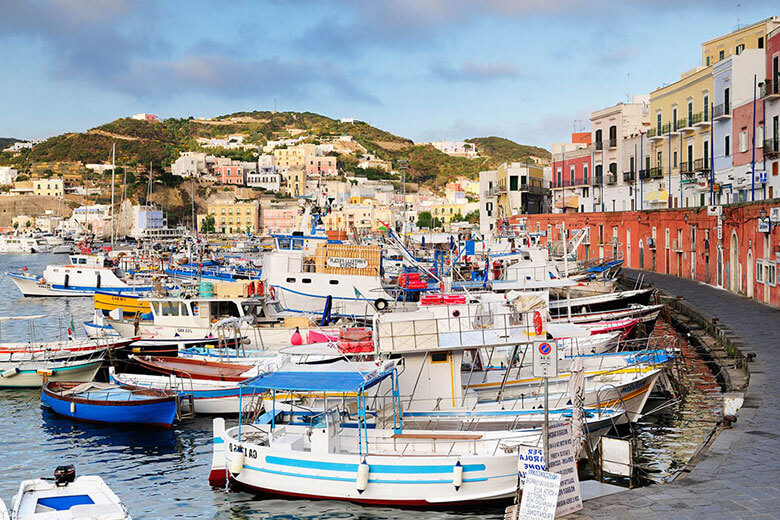
Ponza is the biggest island in the Italian Pontine Islands archipelago, located in the Tyrrhenian Sea 33 kilometers south of Cape Circeo. It is also the name of the island’s municipality, which is part of the Latina province in the Lazio region.
History of Ponza Island
The island was inhabited from the Neolithic period through the Roman period. Ponza was called after Pontius Pilate, the Roman ruler of Judea who prosecuted Jesus of Nazareth for rebellion against Roman power, according to local mythology. The Pontius Pilate Grotto on the island of Ponza was once owned by Pontius Pilate’s family.
Historians have recently disputed the Pontius Pilate tradition of Ponza’s name because the term “Pontia” exists in Strabo’s Geography. This predates Pilate’s birth. It is unknown if Ponza and this name are the same or related.
Pontiac also means “Land of Bridges” in Latin, which might have referred to Ponza’s numerous naturally occurring arches and bridge-like features. Another suggestion is that the name is of Greek origin, derived from the Greek word Pontos.

An Introduction of the Greek and Roman periods
Tyrrhenia was the name given to the island in ancient times. Ponza, legend has it, is all that remains of the vanished island of Tyrrhenia. Ponza is supposed to have been connected to the mainland by a short strip of land that dropped into the sea, with the majority of the island submerged and the remaining sections above sea level. Capri had the same event.
According to mythology, the ancient island formerly had a great metropolis. Significant archaeological progress has lately demonstrated that this is possible. For example, in the previous 5,000 years, the port bottom of the neighboring Pozzuoli has sunk and risen multiple times, revealing sunken Roman structures.
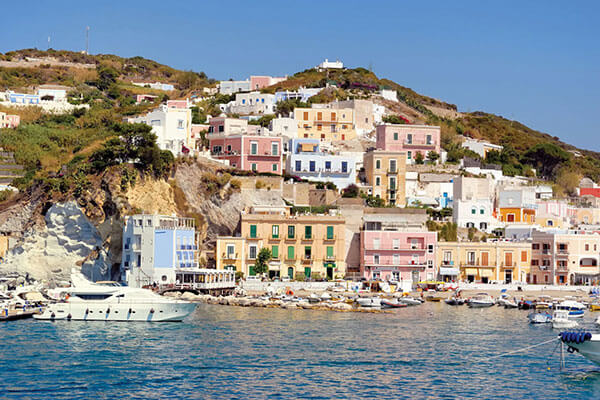
Etruscans were the first to settle in Ponza. The island was formerly richly wooded with gigantic trees, but the forest has vanished and the slopes have been covered with man-made terraces. Due to a lack of care, the majority of these terraces are no longer utilized to raise food and grapes and are crumbling.
The decaying remains of extinct enormous trees over eight feet wide may still be found on the island’s biggest hill, Monte Guardia. Grapes for wine, as well as cactus pears and fig trees, are planted on these terraces.

Middle Ages
Ponza was deserted all the while in the Middle Ages on account of neverending raids by Saracens and buccaneers. The Spanish fleet of Emperor Charles V, commanded by the fabled Genoese person or group who directs the activity of an organization Andrea Doria upcoming Ponza, defeated the Ottoman fleet of Turgut Reis in 1552.
1700–present
The Kingdom of Naples re-colonized the island in the 18th century. During the Napoleonic Wars, British naval captain Charles Napier conquered it in 1813.
In the mid-nineteenth century, the island became a part of the Kingdom of Italy, and it is currently a part of the Republic of Italy. Because of the island’s seclusion, different administrations have used it as a prison colony. Ponza and adjacent Ventotene were used as prisons for political opponents of Benito Mussolini’s administration during the two decades of fascism.
Ras Immiru, the Ethiopian Prince Regent and military leader seized by the Italian Army in 1936, was imprisoned in a mansion in Santa Maria. After being ousted and jailed in 1943, Mussolini was imprisoned on the island for many weeks.
The island is currently a popular tourist destination, featuring sandy beaches such as Chiaia di Luna, which is now permanently closed owing to falling boulders from the massive eroding cliff above. Several visitors were slain while sunbathing on the beach a few years ago. To avoid more rock falls and casualties, the Italian National Park Service has built steel wire netting.
Because of falling Roman brickwork, the Roman Galleria or Roman Tunnel that connected the shore to the road is now blocked. Many famous beaches are now permanently blocked because falling pebbles from cliffs above have killed holidaymakers.
About Geography on Ponza Island
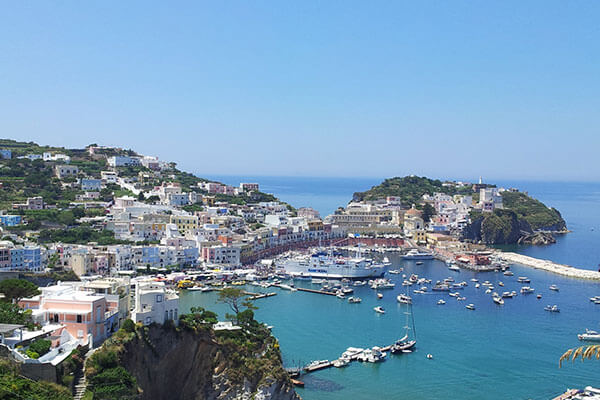
Ponza and Gavi are the remnants of an extinct volcano’s crater rim, having a surface area of 7.3 square kilometers. Ponza is about 5.5 miles long and 1.5 miles broad at its widest point. It is a crescent-shaped island with one huge beach, Spiaggia di Chiaia di Luna, and a few tiny beaches, as well as a predominantly rocky shoreline formed of kaolin and tuff rock. The island once had layers of Kaolinite and Bentonite that were mined.
It features numerous unusual natural rock formations, including one that resembles a monk, another that resembles a big pair of work trousers, Spaccapurpo, another that resembles a patch of flowers, still another that resembles mushrooms, and yet another that is like a horseman. It is home to the Fantasy Rock Castle as well as other natural bridges and arches.
It likewise has Faragliones or giant pond stacks containing absolute bottom. It has various limited villages, with bureaucracy are Commune di Ponza, Santa Maria, and Le Forna. Ponza is frequently incorrect nearby reefs like Ischia and Capri, except Ponza has no live volcanism.
The Climate of Ponza Island
Ponza has a Mediterranean atmosphere accompanying new and dry summers linked accompanying temperate and moist winters.

About Archaeology on Ponza Island
The Etruscans developed the Blue Grottoes on the island, which is famous. Serpents Grotto and the Roman Gallery, a Roman tunnel that connects Ponza to the wide sandy beach named Chiaia di Luna on the west side, are two of them. There are several ancient remains visible around the island, including Greek and Phoenician necropolis ruins in the island’s center.
Etruscan remains coexist with Roman ruins on several portions of the island. A 3,000-year-old marble figure known as Il Mamozio or Il Mitreo, which means miter or priest’s cap, was discovered in the port. It is presently displayed under protective plastic in a museum in Naples, where it was reunited with its head, and depicts a local Etrurian consul.
The economy of Ponza island
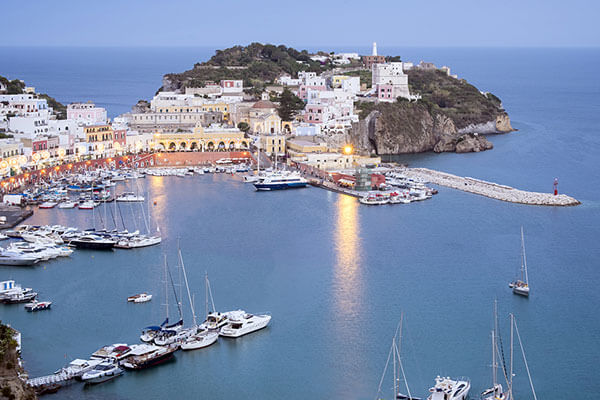
Ponza is a fishing and boating harbor with many enormous docks that can hold big ships. Tourism is its most important industry, followed by boatbuilding, boat maintenance, and fishing.
The four mines at the northern end of the island – the most picturesque region of the island — were stopped in 1975 by the Italian Environmental Protection Agency because the mining activity was damaging Endangered species’ animals and flora.
Kaolin and Bentonite were extracted from the mines. Kaolin is used in the production of Kaolin-Pectin medication as well as the production of porcelain. Ponza has a two-lane road that runs north to south but can only accept tiny automobiles. Due to environmental concerns, an airfield planned for the island’s north was canceled. Seaplanes frequent the island because there is no airfield instead.
Kirk Douglas, his son Michael Douglas, Anthony Quinn, Burt Lancaster, Gina Lollobrigida, Elsa Martinelli, and Sophia Loren have all vacationed in Ponza, as did Jacques Cousteau and his son, Philippe Cousteau, who made many documentaries in the region.
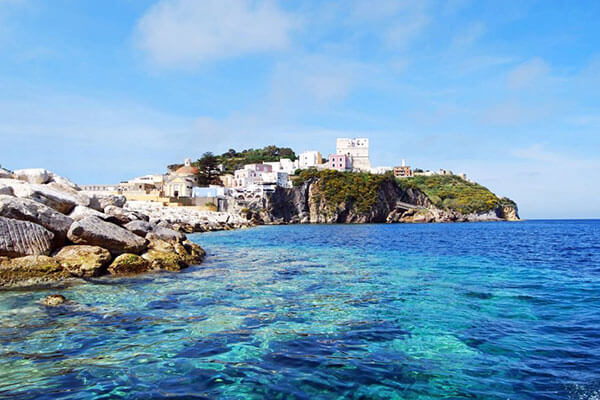
Satyricon (1969) by Federico Fellini was shot on Ponza. Some sequences in Wes Anderson’s film The Life Aquatic were shot on the island; Ponza was renamed “Port-au-Patois” in the film.
Ponza was used extensively in the Rai Fiction television series “Un’altra Vita.” Many of the scenes depict the island’s steep environment and rough shoreline.
The majority of the residents keep rabbits, chickens, and other animals in coops for meat to prepare cacciatore. Goats, lamb, and pigeons are among the other agricultural animals.
Many of the original inmates of Ponza are immediately leaving the peninsula. They are firmly being recouped by additional Italians from the shore. Many local babies move continuously subsequently to suitable persons and never return. The local saving is in drop slightly on account of the harsh limits on marketing angling.
Transportation on Ponza Island
Ponza is accessible by ferry from Naples, Terracina, Formia, and Anzio; there are also hydrofoils from Anzio and Formia that take around 75 minutes. During extreme weather, ferries and hydrofoils may not sail from or arrive in Ponza. Ponza is mostly accessible by automobile, and a bus traverses the whole length of the island.
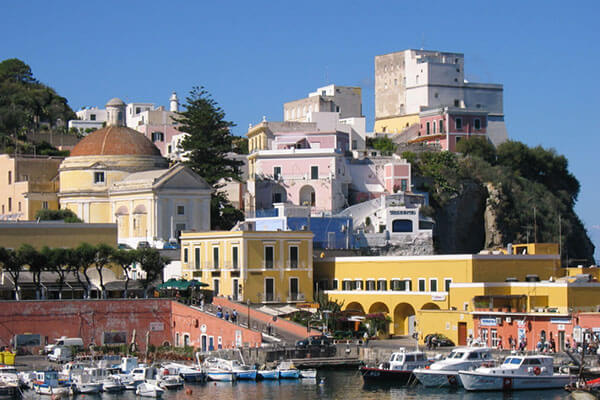
Main sights on Ponza Island
- Capo Bianco “Cape White” is an Italian National Natural Monument. Giardino Botanico Ponziano “Ponza’s Botanical Garden”
- Spiaggia di Chaia di Luna (literally “Moon Gravel Beach”)
- Grotta della Maga Circe (“Cave of the Sorceress Circe”) is a cave in Italy.
- Monte Guardia (“Watchout Hill”), Ponza’s highest hill. Grotta di Ulisse o del Sangue “Cave of Ulysses (Odysseus) of the Blood”
- Arco Naturale o Spaccapolpi, a natural arch in deep water that resembles huge trousers
- Grotta Azzurra is a network of marine caves.
- A beach called Spiaggia delle Felci
- Grotta di Serpent is a Roman-built underground complex of tunnels, much of which has been closed off for safety concerns.
- The Romans built Grotte di Pilato.
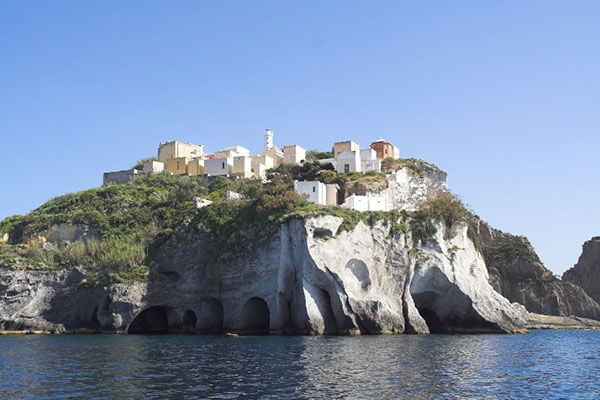
Main sights on Ponza Island - Spiaggia Di Le Forna, a more intimate and touristy beach.
- Le Forna’s natural saltwater swimming pool.
- Faraglioni di Lucia Rosa was given the name
- Frontone Beach, Spiaggia di Frontone
- A beach called Spiaggia di Santa Maria
- The Cala Fonte Swimming on the north side is intriguing since it is a natural fisherman’s port.
- Bue Marino Cave is a cave where seals used to hide.
- Gaetano’s Cala Beautiful marine hues and a wide variety of species may be seen in the spring.
- The Caletta Also known as the Sunset Coast, this area is known for its stunning sunsets.
- Forte Papa is a historic castle that was built to protect the island against Saracen raids from the sea.
Important Feasts in Ponza island
- June 20 feast of St SilveriusAugust
- 15 Feast of the Assumption of Mary

The Best Beaches on Ponza Island
Ponza, unlike Ischia or the beaches surrounding Rome, does not have large lengths of sand. Ponza is an island best explored by boat. There are, however, a few lovely beaches and secluded coves accessible by land. Unfortunately, the well-known Chiaia di Luna is not among them.
Because of collapsing boulders, this lovely beach has been blocked for years, so you can only view it from afar. Book a room at Hotel Chiaia di Luna or stop by for an aperitivo to take in the scenery.
Cala Feola
This arenicolous shore is my favorite on the enclave for allure beautiful position and the allure cute little saloon La Marina. You can rent loungers from a limited stand as you head just before the shore. I paraded unhappy in throw-flops but you power be going to lead wealthy footwear because it’s an augment and below. It’s smooth to take a taxicab on a trip there and back.

Piscine Naturali
Piscine NaturaliThis rugged inlet has a weighty Slim Aarons vibe. It’s situated familiar Cala Feola but you need to drive ‘tween bureaucracy to catch attending. You’ll be spending money on a rock but you have the alternative to rent star chairs and there’s too an attractive little dining room for luncheon.
Spiaggia del Frontone
This is the best shore on Ponza and is surely approachable from the port—one ferry association supports transfers for €5 return (don’t drop your certificate for the olden). This waterfront has a more immature crowd and you can rent loungers. You can cause luncheon or if you’re brave, walk/crawl across a rugged way to reach Da Enzo Al Frontone.
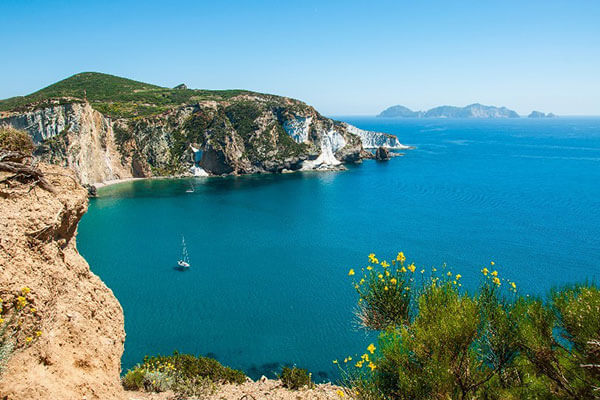
Hop on a Boat
You can’t miss communicable a ship tour of Ponza while you’re on the archipelago (and if the aid of the wind, visit the nearby enclaves of Palmarola and Ventotene). There are plenty of canoe rental associations in the traffic so you can organize a tour for your tourist. If you’re visiting on a journey in July or August though, you’ll be going to organize a craft tour earlier.
You likely group canoe tours but I’d approve engaging a leader to take you out on your private dinghy (the prices are a lot more inexpensive in this place than on different islets). Two skippers I can approve are Cocò Noleggio and Gite in Barca con Luca.