


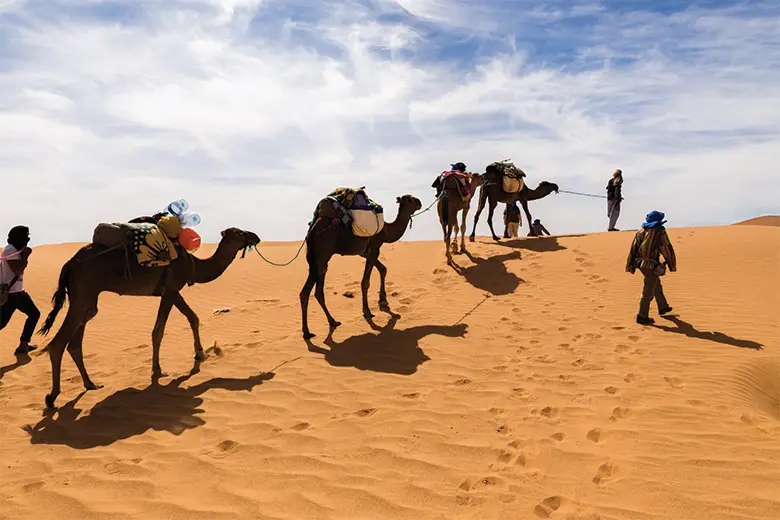
Feel the Heartbeat of Qatar’s Desert – Where Camels Race the WindIn the land of endless dunes and golden horizons, few experiences capture Qatar’s soul quite like camel racing. What began as simple entertainment during village celebrations centuries ago has evolved into a thrilling sport that blends tradition, pride, and innovation.
Once a pastime for Bedouins, camel racing today is one of Qatar’s most cherished cultural symbols—and a multi-million-dollar sport drawing visitors and competitors from across the world.
The country’s passion for these majestic animals runs deep. The first official camel race in Qatar was held in 1973 in the Al-Far area, where 300 camels thundered across the sand in front of cheering crowds. Half a century later, the same spirit still fills the air each weekend in the desert town of Al Shahaniya, about an hour from Doha.
Where the Desert Roars – Al Shahaniya Camel Racing Track
Head west from Doha and you’ll find yourself in Al Shahaniya, home to one of the most famous camel racing tracks in the Gulf. This modern racing facility is surrounded by wide-open desert, where the sand shimmers under the Qatari sun.
Visitors who arrive early—around 9 or 10 a.m.—can watch the camels being groomed and trained. The sight is mesmerizing: dozens of sleek camels jogging around the track, trainers calling out commands, and drivers testing their remote controls for the robotic jockeys.
The real excitement begins on Friday mornings, between October and February, when races officially take place. The track comes alive with crowds, cameras, and commentary. The main events of the season are held in March and April, culminating in the prestigious Golden Sword competition, awarded in the name of His Highness Sheikh Hamad bin Khalifa Al Thani.
Entry is free, and races typically run from 7 a.m. to 2 p.m. Visitors can explore the stands, get close to the track, and capture stunning photos as hundreds of camels sprint toward the finish line.


How Champions Are Made – The Training Behind the Speed
Every champion starts young in the Qatari desert.
Camel trainers begin working with their animals at around two years old, gently preparing them for a career that can last up to a decade. Training takes place twice a day, each session lasting roughly 45 minutes.
At this stage, young camels learn to run in formation beside older racers. Speed, endurance, and obedience are key. To qualify for professional competition, a camel must reach speeds of 40 kilometers per hour or more.
Their diets are carefully controlled, rich in milk, dates, oats, and honey—an energy-packed menu designed to build lean muscle and stamina. Each camel is treated like an athlete, and owners often spend thousands of dollars ensuring the best possible care.
When Robots Took the Reins – The Modern Face of Camel Racing
In the early days, small children were used as jockeys because of their lightweight build. But by 2004, Qatar banned the use of child riders and replaced them with robotic jockeys, a change that revolutionized the sport.
Today, these compact mechanical riders weigh about 25 kilograms and are controlled by remote. They’re dressed in colorful silks to preserve the traditional look and even fitted with small whips to signal the camels during the race.
It’s a fascinating mix of heritage and high-tech—proof that Qatar honors its traditions while embracing innovation.

Beyond the Race – Exploring Al Shahaniya and the Desert
Al Shahaniya isn’t just a race track; it’s a window into Qatar’s desert life.
Visitors can wander around the training farms, meet camel handlers, and learn about breeding practices. The area is also home to some of the most expensive and well-groomed camels in the world, each worth tens of thousands of dollars.
When the races end, stick around to enjoy the desert itself. The landscape surrounding Al Shahaniya is stunning at sunset—endless dunes glowing orange and gold as the sky softens into twilight.
If you’re looking for an unforgettable photo spot, this is it. The combination of silence, sand, and history makes it feel almost timeless.
Ride Into the Desert – The Camel Experience for Travelers
You don’t need to be a racer to enjoy Qatar’s love for camels. Across the country, there are numerous spots where visitors can ride camels through the desert and experience a slower, more peaceful rhythm of travel.
One of the most popular places to do this is near Sealine Beach, south of Doha. Here, tour operators offer combined desert safaris that include dune bashing, sandboarding, and a camel ride under the open sky.
As your camel sways gently over the golden dunes, the sound of the wind replaces the noise of the city. The desert feels endless, and every step of the journey connects you with centuries of Arabian tradition.

What Makes Camel Riding So Special
Camel riding isn’t just another tourist activity—it’s an authentic way to experience Qatar’s desert culture up close. It’s calm yet thrilling, traditional yet deeply personal.
Here’s why travelers love it:
- Authenticity: Riding camels connects visitors to a tradition that’s older than Qatar itself.
- Adventure: Combine it with dune bashing or sandboarding for a full desert thrill.
- Scenery: The best rides happen at sunset, when the dunes turn red and the sky glows purple.
- Accessibility: Tours are available year-round and suitable for families, couples, and solo travelers.
How Much Does It Cost
While Qatar is known for luxury, camel riding is surprisingly affordable compared to similar experiences in other countries.
A 30-minute ride typically costs less than $20, depending on the tour company and package you choose. Some tours include extras like desert safaris, meals, or sunset photo stops.
Prices vary based on:
- The duration of the ride
- The inclusion of other desert activities
- Whether transportation from Doha is included
Most local operators offer packages ranging from half-day adventures to full-day desert tours.

Before You Go – Essential Tips for the Desert
Before heading out to the desert, a bit of preparation makes your trip smoother and safer:
- Wear comfortable shoes, a hat, sunglasses, and sunscreen.
- Bring water and light snacks; desert air can be dehydrating.
- Avoid heavy meals two to three hours before dune bashing to prevent motion sickness.
- In summer, wear loose, breathable clothing; in winter, bring a light jacket.
- Use sports shoes if you plan to try sandboarding.
Important: Dune bashing is not recommended for pregnant women, young children under three, or anyone with heart, back, or neck conditions.
When Tradition Meets Tomorrow – The Spirit of Camel Racing
There’s something hypnotic about standing in the desert at dawn, waiting for the first race to begin. The rising sun paints the dunes gold as the announcer’s voice echoes across the track. Then, with a single signal, the camels surge forward—muscles rippling, sand flying, the crowd roaring.
This moment captures the very heart of Qatar: a place where the old and the new run side by side. From ancient Bedouin roots to cutting-edge technology, camel racing embodies everything the nation stands for—heritage, innovation, and unity.
So whether you’re cheering from the stands at Al Shahaniya, riding through the dunes on your own camel, or simply watching the sunset fade behind the desert hills, one feeling remains the same:
Qatar’s desert doesn’t just stay in your memory—it stays in your soul.